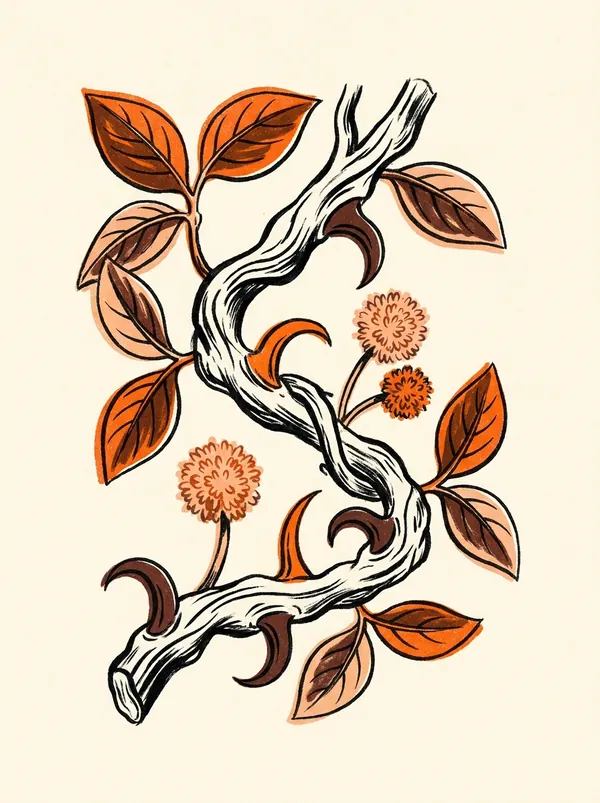
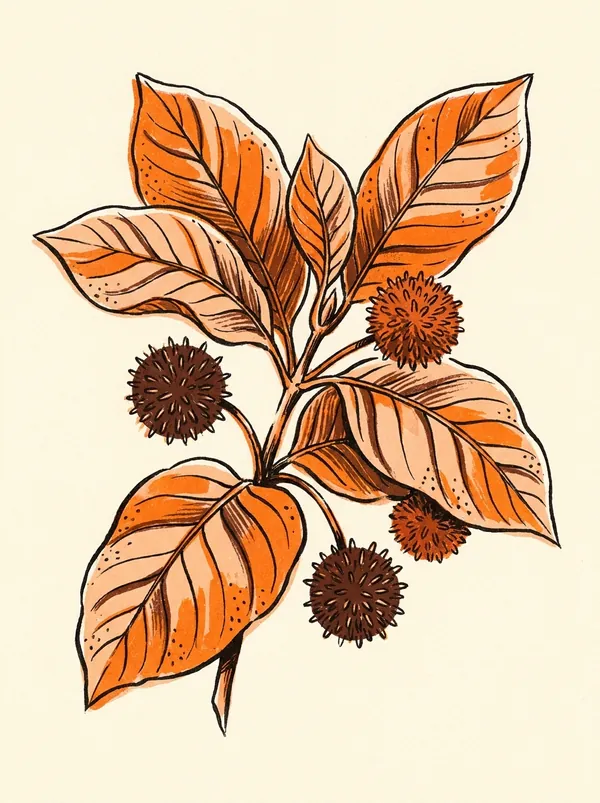
Hirsuta is the one I had to read the most papers for, because there aren’t many. It’s a close cousin of kratom: same genus, same country, and Thailand has four Mitragyna species in all. The older lab work and the newest study don’t fully agree on what’s in the leaf, so I wrote down both and let the COA have the last word.
Side by side
| Feature | Mitragyna hirsuta | Kratom |
|---|---|---|
| Latin name | Mitragyna hirsuta | Mitragyna speciosa |
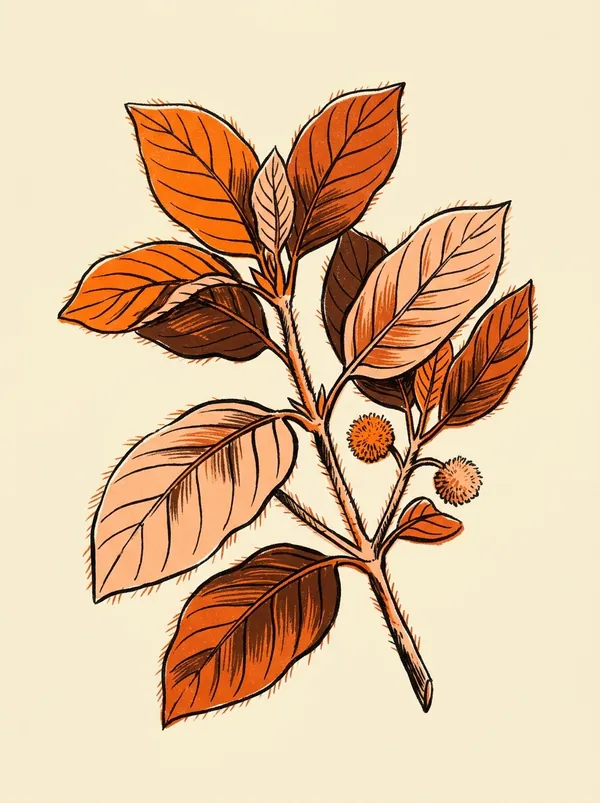
| Plant family / what it is | Rubiaceae (coffee family), genus Mitragyna; a tree with fine hairs on its leaves | Rubiaceae (coffee family), genus Mitragyna; a tree with large glossy leaves |
| Where it grows | Thailand and mainland Southeast Asia | Thailand, Malaysia, Indonesia, Papua New Guinea |
| Local name | Kra thum khok (Thai) | Kratom (Thai), ketum (Malay) |
| Part used | Leaf | Leaf |
| Main compounds researchers study | 1960s leaf studies: oxindoles (mitraphylline, isomitraphylline, rhynchophylline, isorhynchophylline); a 2025 study also detected mitragynine and 7-OH | Mitragynine, the main alkaloid; 7-OH in trace amounts |
| How much research exists | A handful of papers | Widely studied; a NIDA research topic |
| Common forms sold | Leaf powder, extracts, chewable tablets (sometimes blended) | Leaf powder, capsules, liquid extracts, shots |
| Legal status in the US (Nov 2026) | Not federally controlled; state rules on Mitragyna alkaloids vary, so check | Not federally scheduled; banned in 11 states |
| What to check on the label | Full Latin name; COA testing mitragynine and 7-OH | Whether it’s legal in your state; COA listing mitragynine and 7-OH |
Which one fits what you’re after
If you care about
a different species from kratom
→ Mitragyna hirsuta
Same genus, separate species; DNA tests can tell them apart
If you care about
a large body of published research
→ Kratom
Hirsuta has only a handful of papers so far
If you care about
knowing exactly what’s in a batch
→ Either: the COA
Ask for a lab report that tests mitragynine and 7-OH with numbers
What I check on the label
- The full Latin name, Mitragyna hirsuta, not just “hirsuta” or a brand nickname.
- A COA that tests for mitragynine and 7-OH and shows results (or “ND”), not just “pass.”
- Blends: each extract and its amount listed, not one proprietary-blend total.
- Plant part and extract ratio stated on the panel.
Is it legal where you live? Rules for kratom and 7-OH change by state and city. Check the state-by-state map on 7-OH Laws →
Common questions
Is Mitragyna hirsuta the same as kratom?
No. Both are in the genus Mitragyna, but kratom is Mitragyna speciosa and hirsuta is a separate species.
Does Mitragyna hirsuta contain mitragynine or 7-OH?
Older leaf studies reported mainly oxindole alkaloids. A 2025 Thai study detected mitragynine and 7-OH in leaf extracts of hirsuta and three other Mitragyna species. Amounts can vary, so check the batch COA.
Is Mitragyna hirsuta legal?
It is not federally controlled in the US. Some state laws name kratom’s alkaloids rather than the plant, and those rules change, so check your state.
What is kra thum khok?
The Thai name for Mitragyna hirsuta.
Sources (5)
- Shellard et al. 1967, The alkaloids of the leaves of Mitragyna hirsuta (Planta Med)
- Sudmoon et al. 2025, Rhynchophylline and mitraphylline in Thai Mitragyna species (Sci Rep)
- Tungphatthong et al. 2021, Telling kratom from other Thai Mitragyna species (Sci Rep)
- FDA: FDA and kratom
- 7-OH Laws: kratom by state
— Dan
Updated by Dan Mercer.