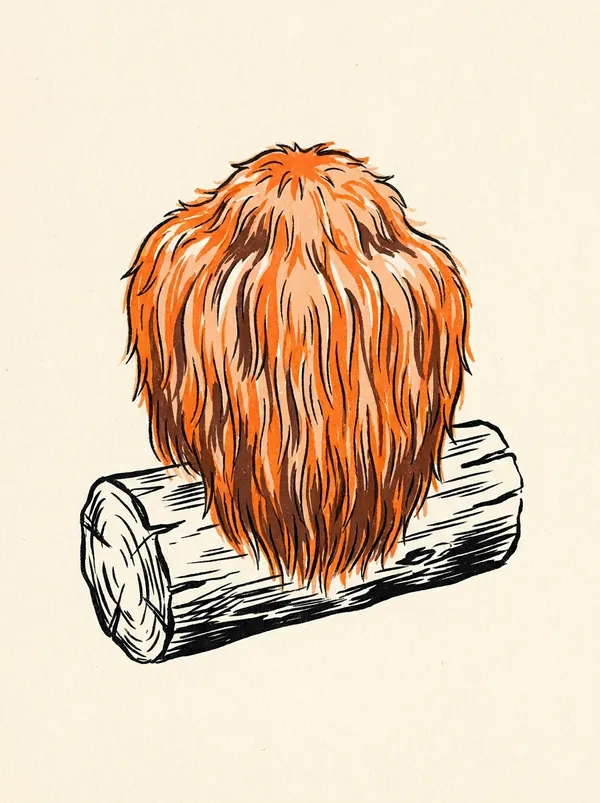
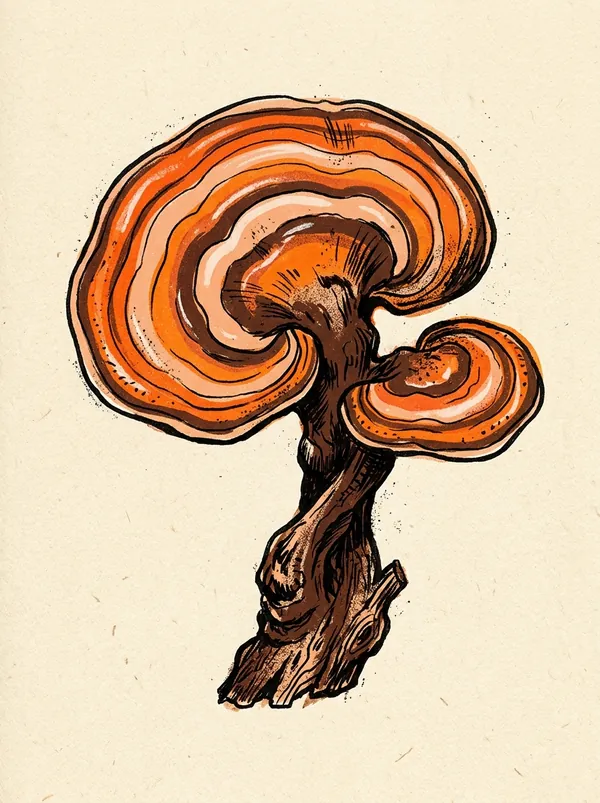
“Functional mushrooms” gets used like one ingredient. It isn’t. Lion’s mane is something you could sauté; reishi is closer to a piece of lacquered wood. They grow differently, contain different compounds, and the biggest label question for both is the same: is this the mushroom itself, or the mycelium it grew from?
Side by side
| Feature | Lion’s mane | Reishi |
|---|---|---|
| Latin name | Hericium erinaceus | Ganoderma lucidum (East Asian lingzhi is often named Ganoderma lingzhi) |
| Family / what it is | Hericiaceae; a white, shaggy mushroom with hanging spines | Ganodermataceae; a hard, glossy red-brown shelf fungus |
| Where it grows | On dead or dying hardwood trees | On hardwood stumps and logs; most sold today is cultivated |
| Part used | Fruiting body and mycelium | Fruiting body, mycelium and spores |
| Main compounds researchers study | Hericenones (from the fruiting body) and erinacines (from the mycelium), plus polysaccharides | Triterpenes such as ganoderic acids, and beta-glucan polysaccharides |
| Common forms sold | Capsules, powders, liquid extracts, coffee blends, gummies | Capsules, tablets, extracts, powders, teas, spore powder |
| How it’s usually taken | Eaten as a culinary mushroom in East Asian cooking | Too woody to cook with; traditionally simmered as tea |
| Legal status in the US | Sold as a food and dietary supplement; not controlled | Sold as a dietary supplement; not controlled |
| Safety notes worth reading | MSK: generally considered safe as food; supplements are more concentrated | MSK: may raise bleeding risk with blood thinners; rare liver-injury reports |
| What to check on the label | Fruiting body or mycelium, beta-glucan %, species named | Fruiting body, mycelium or spores; beta-glucan or triterpene % |
Which one fits what you’re after
If you care about
a mushroom that is also food
→ Lion’s mane
Eaten fresh, dried or cooked in East Asian cuisine
If you care about
a long place in Chinese tradition
→ Reishi
Lingzhi has appeared in Chinese herbal texts and art for centuries
If you care about
labels that tell you what’s inside
→ Either
Look for fruiting body vs mycelium and a beta-glucan %
What I check on the label
- Fruiting body or mycelium? Mycelium grown on grain can carry a lot of starch.
- A beta-glucan % (and for reishi, triterpenes) tells you more than “full spectrum.”
- Species named in Latin, with each one’s amount if it’s a blend.
- Reishi: MSK suggests talking to a doctor first if you take blood thinners.
Is it legal where you live? Rules for kratom and 7-OH change by state and city. Check the state-by-state map on 7-OH Laws →
Common questions
Is reishi the same as lingzhi?
Yes, lingzhi is the Chinese name for reishi. Labels usually say Ganoderma lucidum, and you may also see Ganoderma lingzhi, a name now used for the East Asian mushroom.
What’s the difference between fruiting body and mycelium?
The fruiting body is the mushroom you can see. Mycelium is the root-like network it grows from, often grown on grain for supplements.
Do lion’s mane or reishi contain psilocybin?
No. Neither contains psilocybin.
Are lion’s mane and reishi legal?
Yes. Both are sold as foods or dietary supplements in the US and are not controlled substances.
Sources (4)
— Dan
Updated by Dan Mercer.