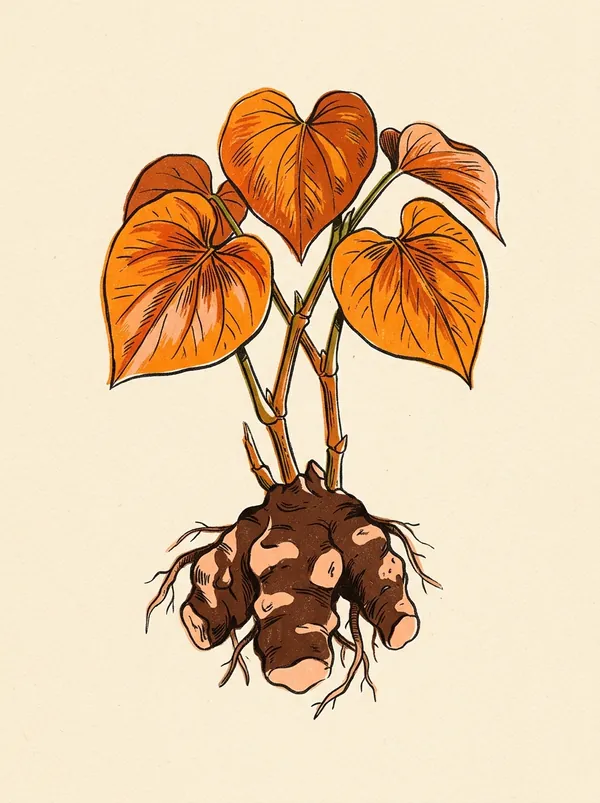
Both are roots, more or less, both have deep traditional histories, and both turn up in the same botanical aisles. That’s why they get compared. The word “poppy” in corydalis’s family name throws people, so I spent a row on that too. Short version: same family as the opium poppy, not the same plant.
Side by side
| Feature | Corydalis | Kava |
|---|---|---|
| Latin name | Corydalis yanhusuo | Piper methysticum |
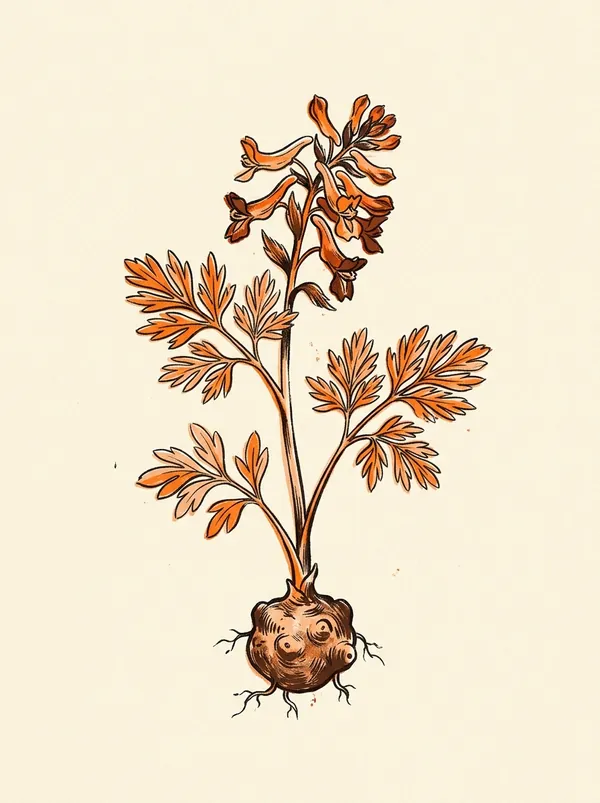
| Plant family / what it is | Papaveraceae (poppy family); a small spring flower, not an opium poppy | Piperaceae (pepper family); a leafy shrub |
| Where it grows | Eastern China; grown commercially in Zhejiang province | Pacific islands: Vanuatu, Fiji, Tonga, Samoa, Hawaii |
| Part used | Tuber (a small round underground root), dried | Root and lower stem |
| Main compounds researchers study | Isoquinoline alkaloids; a 2023 review lists 84, with tetrahydropalmatine (THP) the best known | Kavalactones; six main ones make up most of the total |
| Common forms sold | Dried tuber slices, extracts, capsules, and in some botanical tablet blends | Ground root, instant powder, shots, capsules, extracts, gummies |
| How it’s usually taken | Dried tuber as part of traditional Chinese herbal formulas | Ground root mixed with water and shared at Pacific ceremonies |
| Legal status in the US | Sold as a dietary supplement; not a controlled substance | Legal in all 50 states and DC |
| Safety notes worth reading | Case reports link THP-containing products to liver problems; avoid long-term use | Rare liver-injury reports (FDA advisory, 2002); don’t mix with alcohol |
| What to check on the label | Latin name, tuber, extract ratio, each extract’s amount in blends, batch COA | Noble variety, root only, kavalactone %, batch COA |
Which one fits what you’re after
If you care about
a plant from Chinese herbal tradition
→ Corydalis
Yan hu suo appears in classical Chinese herbal texts
If you care about
a plant from Pacific ceremony
→ Kava
Shared from a common bowl at welcomes and gatherings
If you care about
label standards you can compare
→ Kava
Kavalactone % is a common label standard; corydalis labels vary more
What I check on the label
- Corydalis: Corydalis yanhusuo and “tuber” named; other Corydalis species exist.
- Corydalis in blends: each extract’s amount listed, not one blend total.
- Kava: noble variety, root only, kavalactone %.
- Both have liver-safety notes in the literature. Ask a doctor first if you have liver problems or take medication.
Is it legal where you live? Rules for kratom and 7-OH change by state and city. Check the state-by-state map on 7-OH Laws →
Common questions
Is corydalis related to the opium poppy?
It’s in the same family, Papaveraceae, but a different genus. Corydalis yanhusuo is not an opium poppy.
What is THP?
Tetrahydropalmatine, the best-known alkaloid in corydalis tubers. Researchers have isolated dozens of other alkaloids from the plant too.
Are corydalis and kava legal?
Yes. In the US both are sold as dietary supplements and neither is a controlled substance; kava is legal in all 50 states and DC.
What is yan hu suo?
The traditional Chinese name for the dried tuber of Corydalis yanhusuo.
Sources (6)
— Dan
Updated by Dan Mercer.