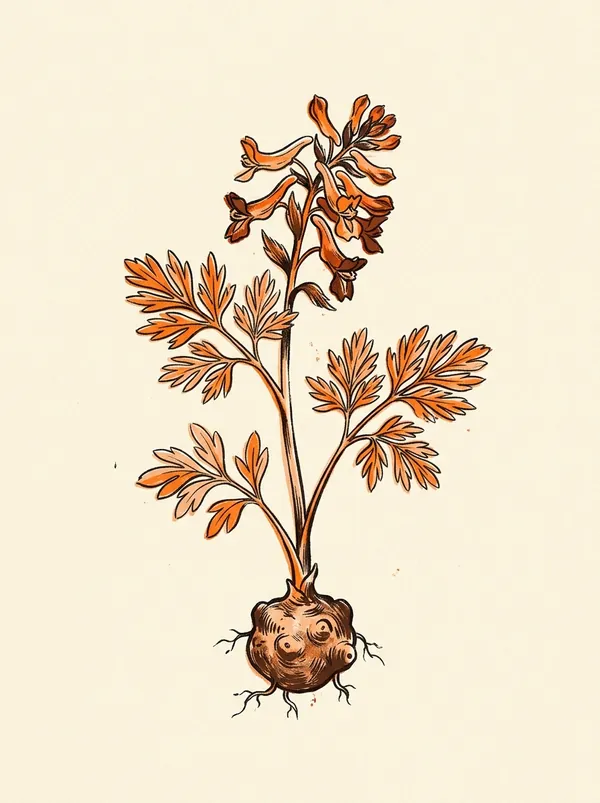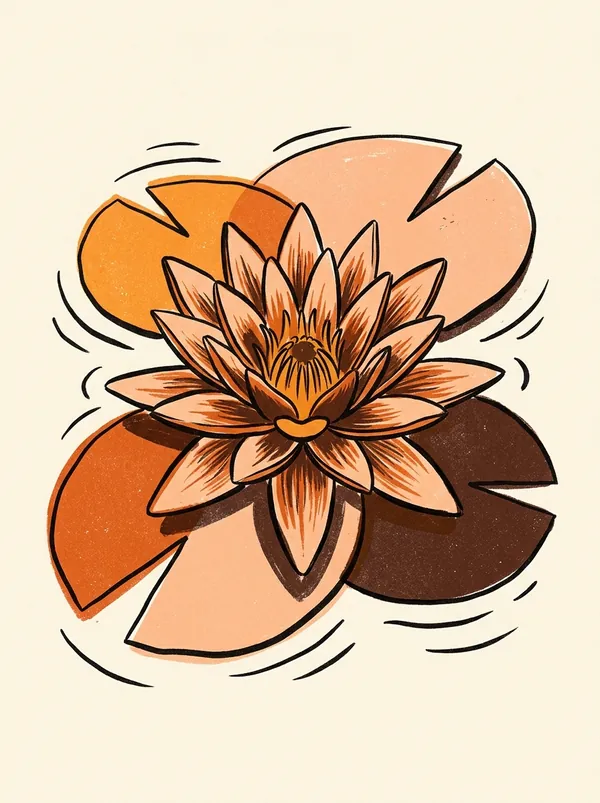
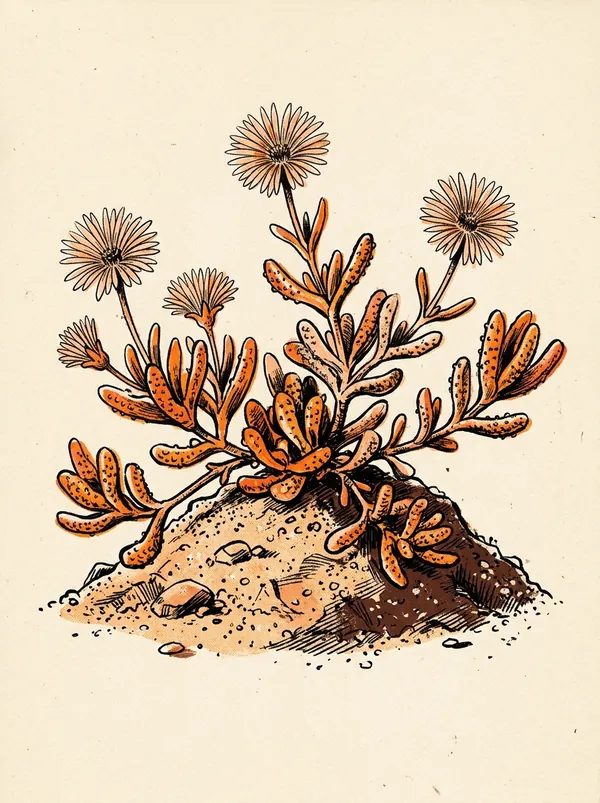
These two keep landing in the same “botanicals from old traditions” lists, usually with very little else in common. One floats on the Nile, the other hugs the ground in a semi-desert. The chemistry is where I found the most surprises, especially on the blue lotus side, where the compounds everyone mentions turned out to be less settled than I expected.
Side by side
| Feature | Blue lotus | Kanna |
|---|---|---|
| Latin name | Nymphaea caerulea | Sceletium tortuosum |
| Plant family / what it is | Nymphaeaceae (water lily family); not a true lotus | Aizoaceae (ice plant family); a low succulent |
| Where it grows | The Nile and parts of East Africa | South Africa, mainly the Karoo |
| Part used | Flower | Above-ground parts, traditionally fermented and dried |
| Main compounds researchers study | Aporphine alkaloids (nuciferine, apomorphine) are often cited, but a 2023 lab study found them virtually absent from authentic extracts | Mesembrine-type alkaloids; a 2022 review counted 25 alkaloids in four classes |
| History | Painted and carved throughout ancient Egyptian art; flowers found in Tutankhamun’s tomb | Used by San and Khoikhoi peoples; written about by Europeans in the 1600s |
| Common forms sold | Dried flowers for tea, tinctures, extracts, capsules, gummies | Fermented dried plant, extracts, capsules, tablets, gummies |
| How it’s usually taken | Dried flowers steeped as tea, or as a tincture | Traditionally chewed; today mostly as extracts |
| Legal status in the US | Not federally controlled; Louisiana lists it as a prohibited plant | Not federally controlled; Louisiana restricts it |
| What to check on the label | Nymphaea caerulea named; flower; extract ratio; batch COA | Extract ratio or alkaloid %; fermented or not; batch COA |
Which one fits what you’re after
If you care about
a plant from ancient art and archaeology
→ Blue lotus
A recurring motif in Egyptian paintings and carvings
If you care about
more published chemistry
→ Kanna
Its alkaloids have been reviewed in detail; blue lotus research is thinner
If you care about
the legal picture
→ Both: same caveat
Neither is federally controlled, and Louisiana restricts both
What I check on the label
- Blue lotus: Nymphaea caerulea on the panel. “Lotus” alone could mean a different plant.
- Blue lotus: big ratios like 50:1 describe concentration, not what compounds are present.
- Kanna: a standardized alkaloid % or ratio, and whether the plant was fermented.
- Both: a batch COA. Louisiana residents: check state law first.
Is it legal where you live? Rules for kratom and 7-OH change by state and city. Check the state-by-state map on 7-OH Laws →
Common questions
Is blue lotus the same as kanna?
No. Blue lotus is a water lily from the Nile; kanna is a South African succulent. They are in different plant families with different compounds.
Is blue lotus a real lotus?
No. It’s a water lily (Nymphaea caerulea). True lotuses belong to a different genus, Nelumbo.
Are blue lotus and kanna legal?
Neither is federally controlled in the US. Louisiana restricts both, so check your state.
Does blue lotus contain nuciferine?
It’s widely said to, but a 2023 GC-MS study found nuciferine and apomorphine virtually absent from authentic blue lotus extracts. Research on the flower is limited.
Sources (6)
- Dosoky et al. 2023, Chemical composition of blue lotus extracts (Molecules)
- PubChem: Nuciferine
- Olatunji et al. 2022, Sceletium tortuosum review (J Ethnopharmacol)
- Krstenansky 2017, Mesembrine alkaloids review (J Ethnopharmacol)
- Louisiana R.S. 40:989.2, prohibited plant products
- 7-OH Laws: kanna by state
— Dan
Updated by Dan Mercer.